Anatomy, Art, and Coffee! Nicole and Rachelle go to Florence, Italy
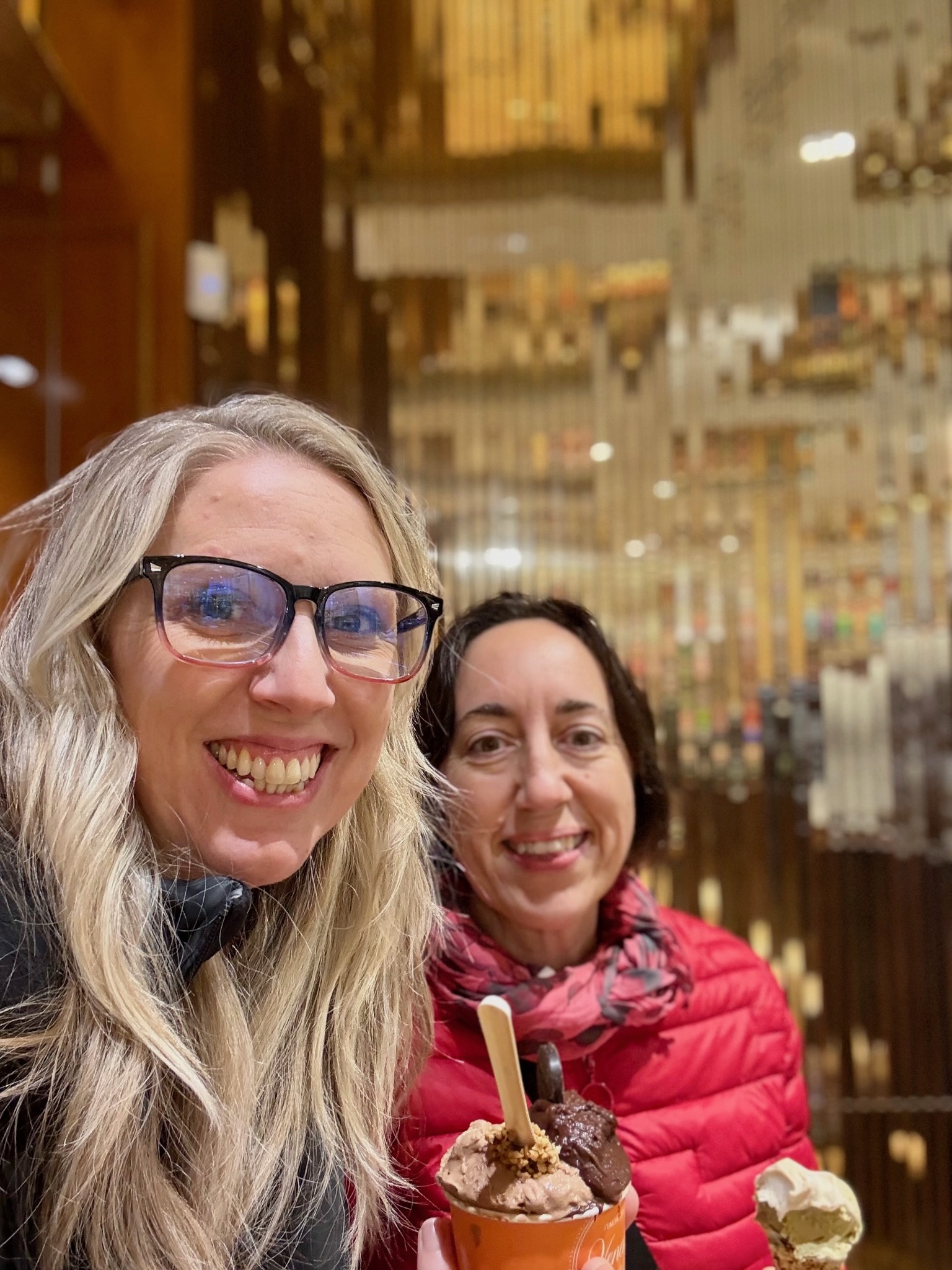
Feb 28, 2025After our week-long seminar in Padua, we hopped on a train to Florence — where we immersed ourselves in an extraordinary convergence of anatomy, art, and science — alongside amazing coffee, wine, endless pasta, and even some winter gelato.
Wandering the streets of Florence, surrounded by medieval and Renaissance architecture, we're constantly reminded that art is everywhere in this city. This is epicenter of Renaissance art, where Da Vinci, Michelangelo, Donatello, Raphael, and Botticelli created some of Western art's greatest masterpieces.
Yet behind Florence's treasure trove of art lies an anatomy story. The explosion of Renaissance art happened in tandem with the birth of human anatomy as a scientific discipline. These weren't separate revolutions. Advancements in anatomy drove artistic innovation, while artistic techniques revolutionized how anatomy was documented, taught, and understood.
The Renaissance fundamentally changed how the human form was represented. The human form emerged as something deeply important, worthy of admiration, celebration, and careful study — made possible through direct dissection. Anatomists needed artists to document their discoveries, and artists needed access to dissections to truly understand the human form. This was particularly true for Leonardo da Vinci and Michelangelo. Leonardo dissected approximately 30 human corpses throughout his career, producing anatomical drawings that were centuries ahead of their time. Michelangelo began dissecting cadavers as a teenager (!!) and continued throughout his life, developing a profound understanding of human form.
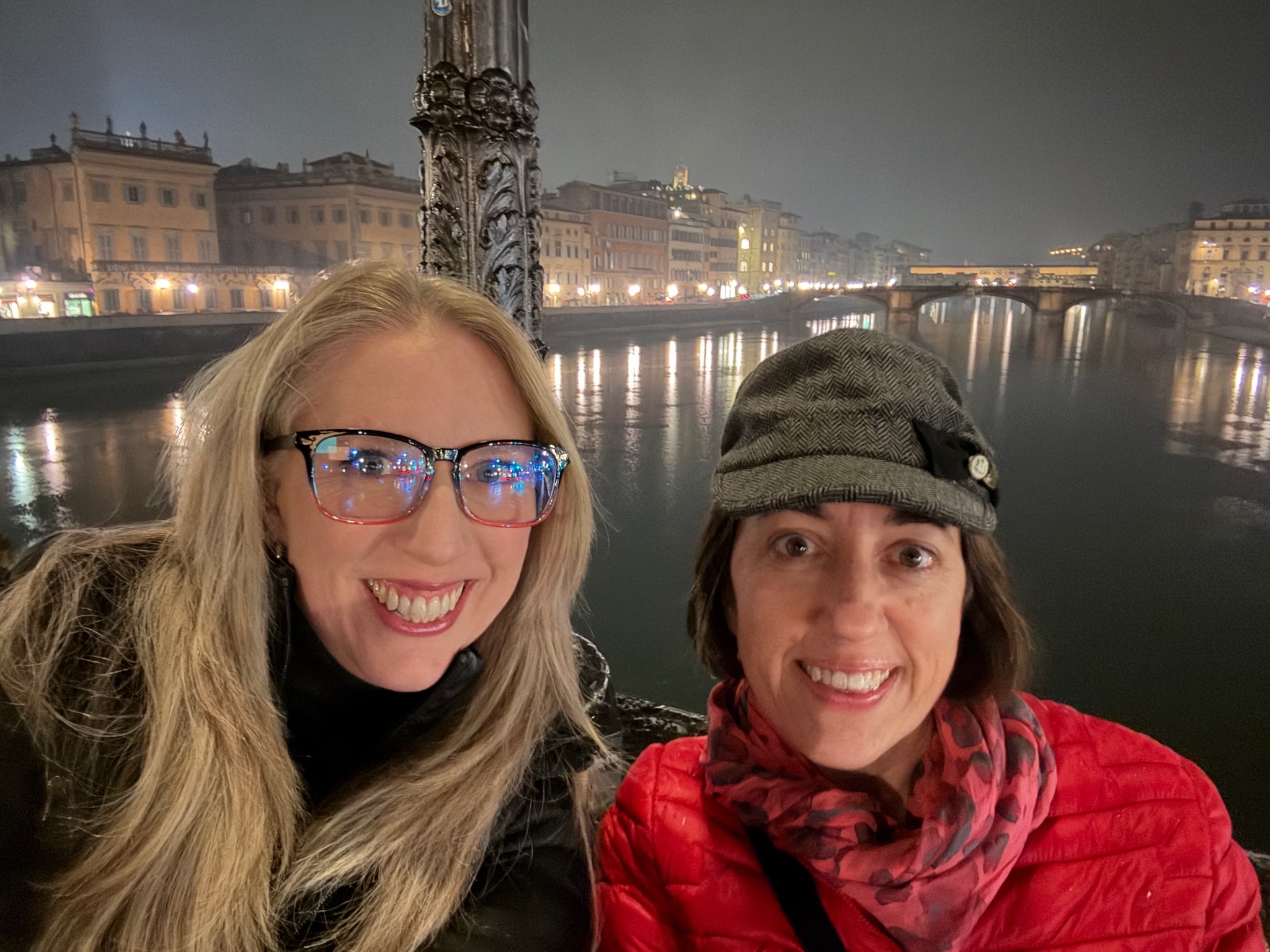
Rachelle and Nicole stop for an evening selfie over the Arno, with the famed Ponte Vecchio in the background.
While there is endless art to explore in Florence, we focused on something near and dear to our hearts: 3-dimensional representations of the human form. Here we share two of our most memorable experiences.
Michelangelo's David
Every visit to Florence must include the Galleria dell'Accademia to see Michelangelo's David. For us, David did not disappoint. This colossal marble sculpture stands 17 feet tall and weighs over five tons—carved from a single block of Carrara marble that two previous sculptors had abandoned as flawed and unworkable.
Michelangelo was only 26 years old when he accepted the commission in 1501, and he worked on David for approximately three years, completing it in 1504.
There's a casualness to David's stance—the way his weight shifts onto his right foot, the relaxed posture of his body. Yet his face is tensed with concentration in his gaze. You could almost imagine him breathing. How do you convey so much emotion, so much state of being, so much inner soul and mind from a block of marble? The surface musculature, the veins visible in his hands and arms as he clutches the stone and slingshot, the subtle contrapposto stance? Every detail reveals Michelangelo's deep understanding of how muscles attach, how bodies move, how tension manifests in form. This wasn't just artistic imagination — it was knowledge gained through his years of studying human cadavers.
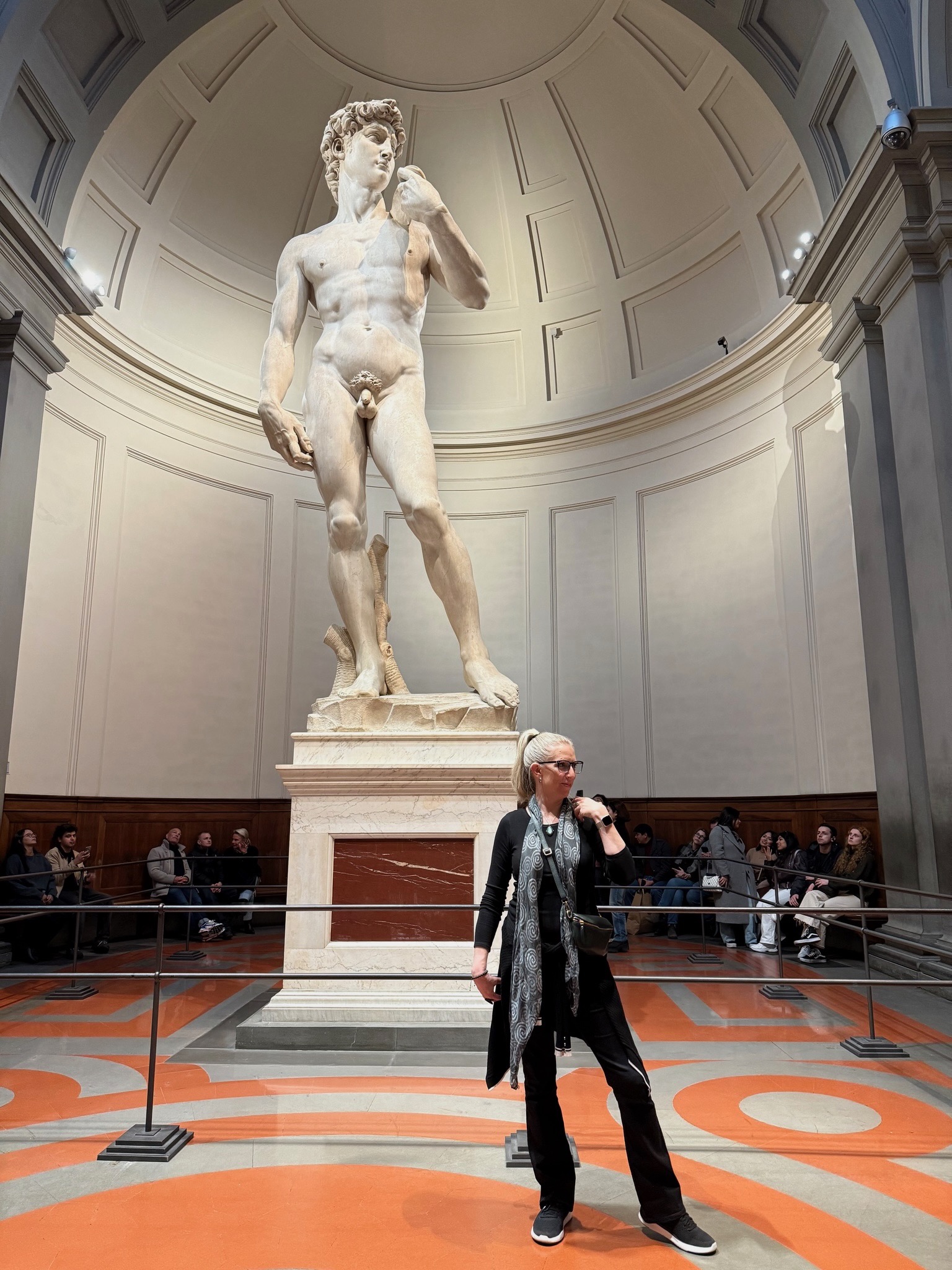
Rachelle mimics David's famed stance — she nailed it! The David originally stood outdoors in front of the Palazzo Vecchio in Piazza della Signoria for 369 years (!!!). It was moved indoors to the Galleria dell'Accademia in 1873, where a specially designed Tribune hall was built to house and protect it.
More 3D Anatomy: Wax Anatomical Models
Serendipitously, our visit to Florence coincided with the 250th anniversary of the anatomical wax museum La Specola, at the University of Florence. Founded in 1775 by Grand Duke Peter Leopold of Lorraine, this is Europe's oldest public science museum—opened to anyone who "looked clean," regardless of social class.
The collection uses detailed wax models based on real dissections to teach anatomy (without the challenges of preserving tissue). Between the late 1700s and mid-1800s, master wax modelers like Clemente Susini and Giuseppe Ferrini worked directly from dissected cadavers, reproducing human anatomy with astonishing precision.
The displays at La Specola are arranged like a catalog of the body. As we walked through, we found rooms organized by system—muscular, ligamentous, vascular, lymphatic, and nervous. Shadow-box frames lined the walls, each holding a specific dissection rendered in wax. Life-size anatomical forms occupied the center of each room, while the original anatomical drawings hung above, created by artists working alongside the anatomists in the dissection room. Remember, this is all before refrigeration existed!
The level of detail took our breath away: muscle by muscle, vessel by vessel, nerve by nerve, lymph node by lymph node. Some structures are rendered life-size; others, like the ear canal, are magnificently enlarged to allow study without a microscope.
These wax models preserve real anatomical relationships in three dimensions for public education: making the complexity of human anatomy visible, tangible, and meaningful to everyone, not just medical students.
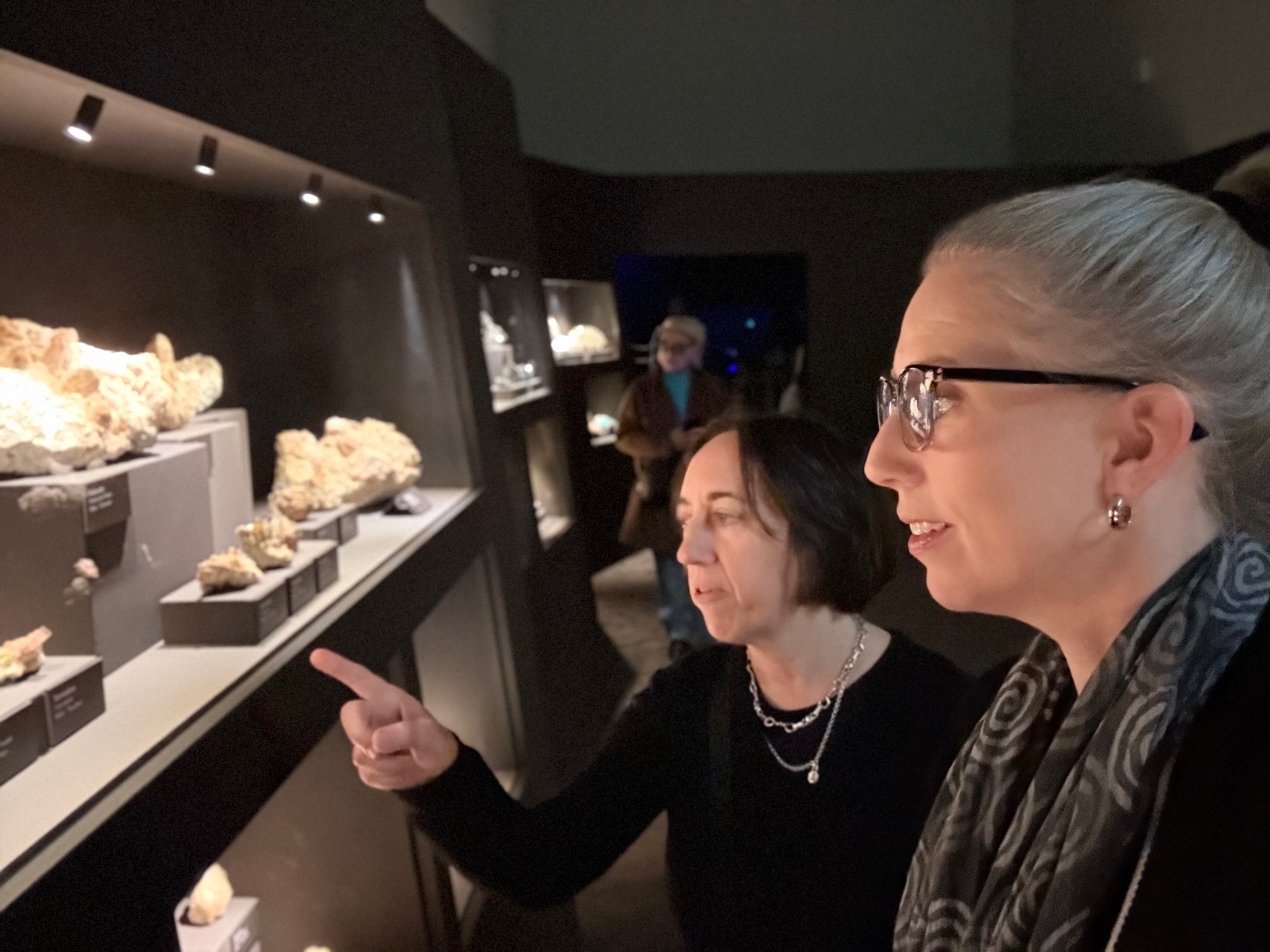
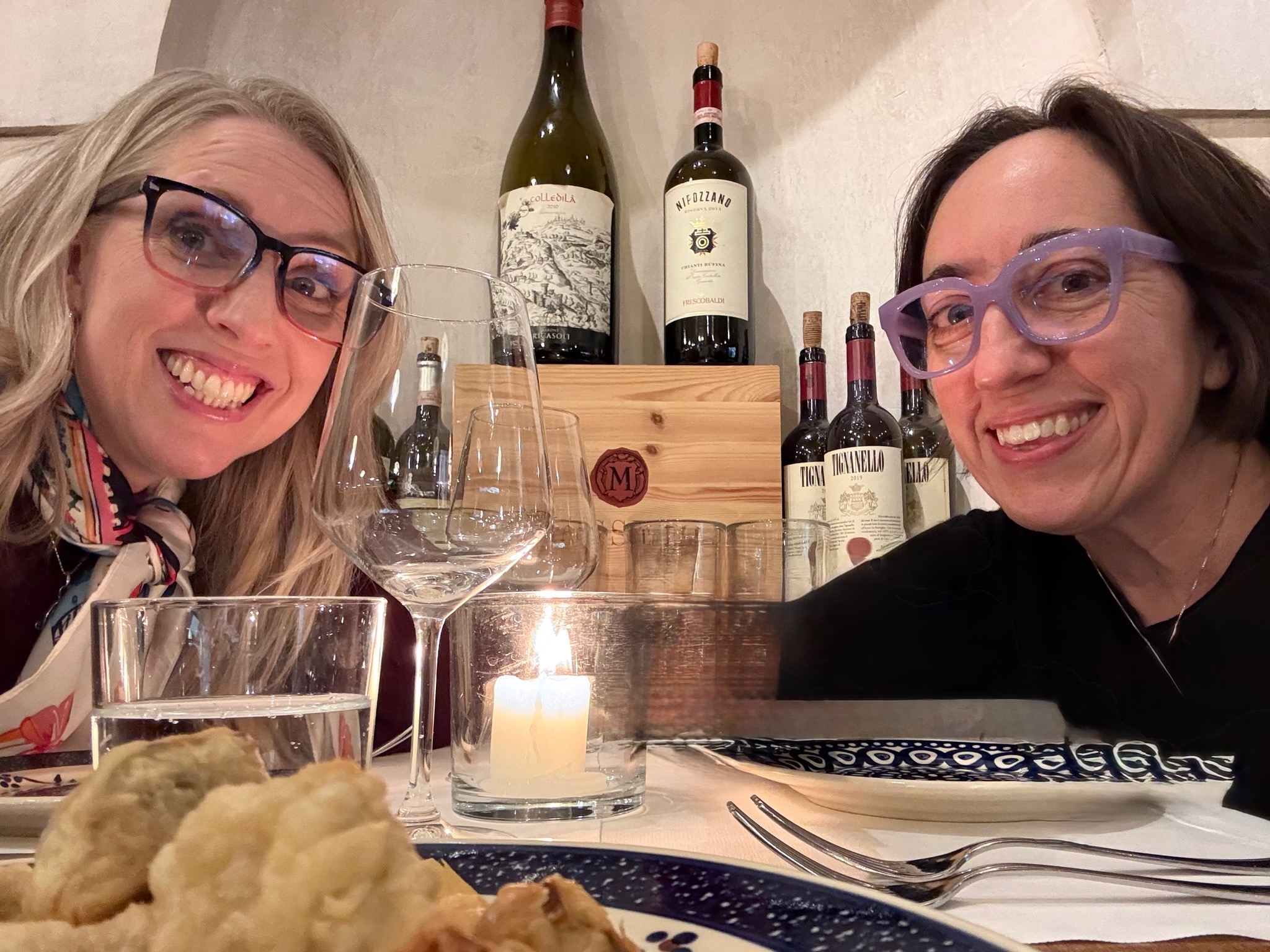
Of course, no trip to Florence would be complete without indulging in the city's other treasures: exceptional wine, incredible food, and yes, even exploring the endless artisans that make "Made in Italy" such a brand force. Florence reminds us that beauty takes many forms—from anatomical precision in marble and wax to the artistry of a well-crafted meal. We're already planning our next trip to Italy! Who wants to come back with us?
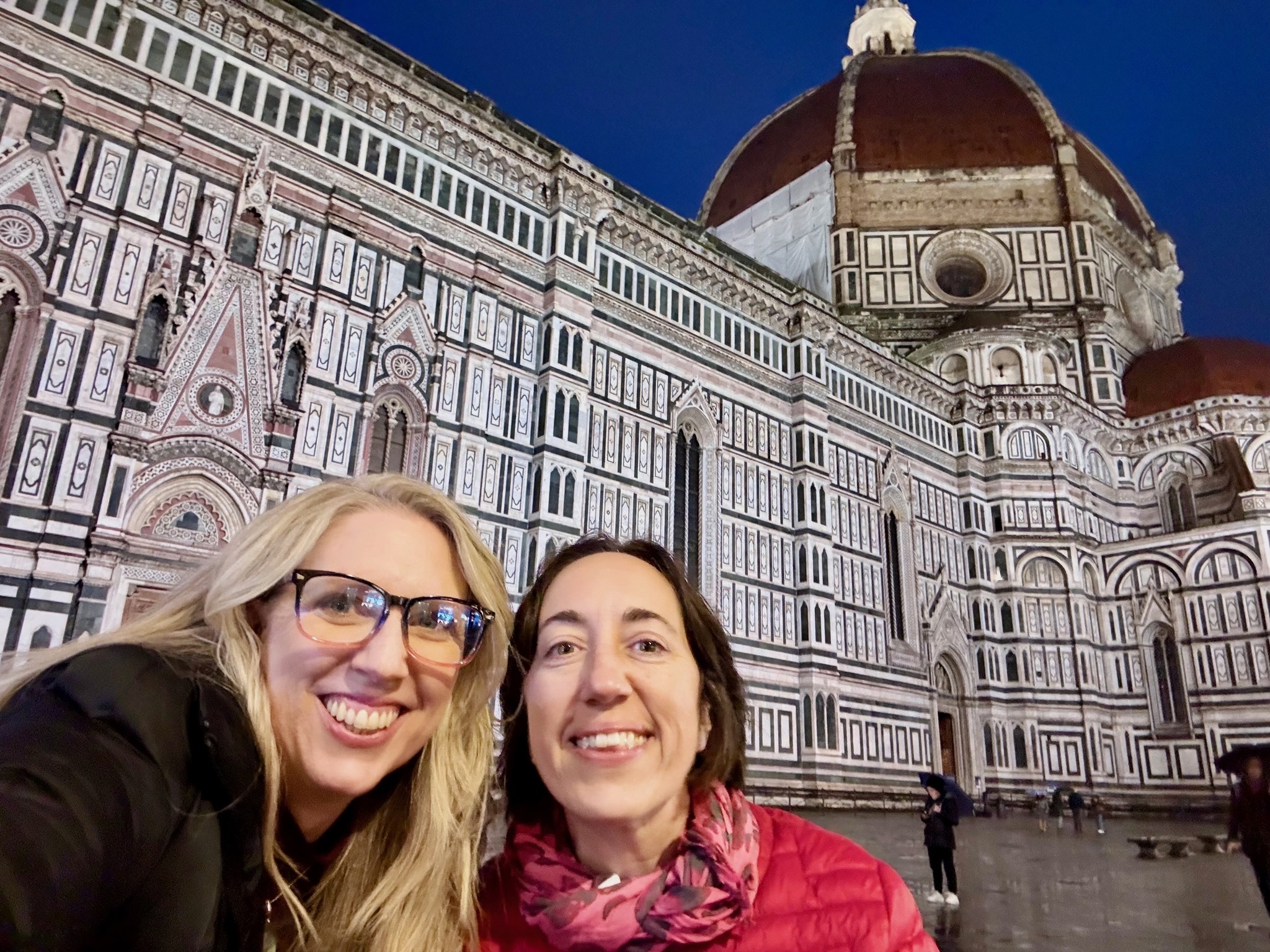
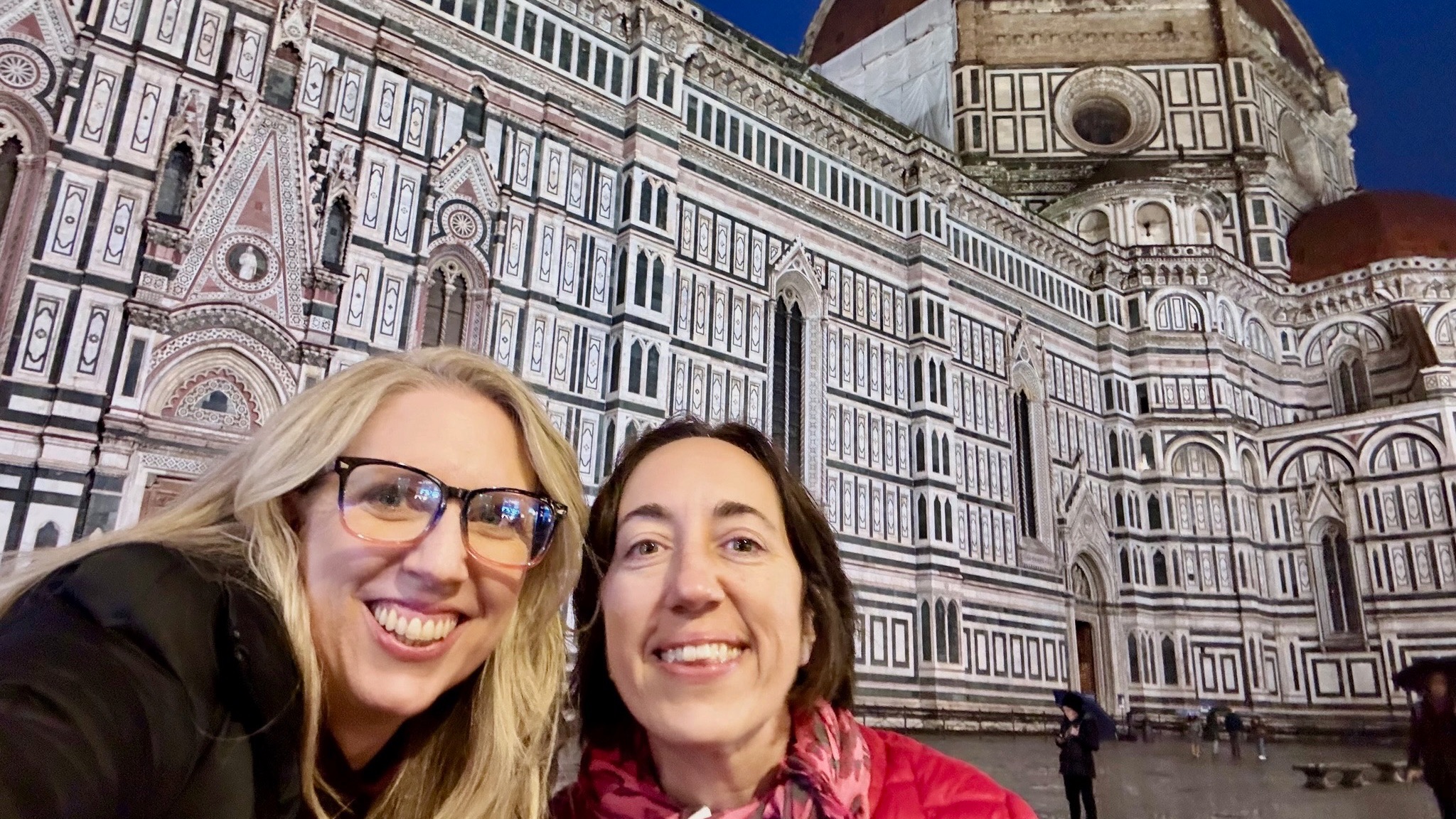
Dominating the cityscape in Florence is the Duomo (Santa Maria del Fiore). This cathedral is massive with its famed dome, designed by Filippo Brunelleschi. The elaborately decorated facade, with its green, pink, and white marble and built-in sculptures, is equally stunning.